10 Warning Signs Your Car Is Low on Engine Oil (And What to Do Next)
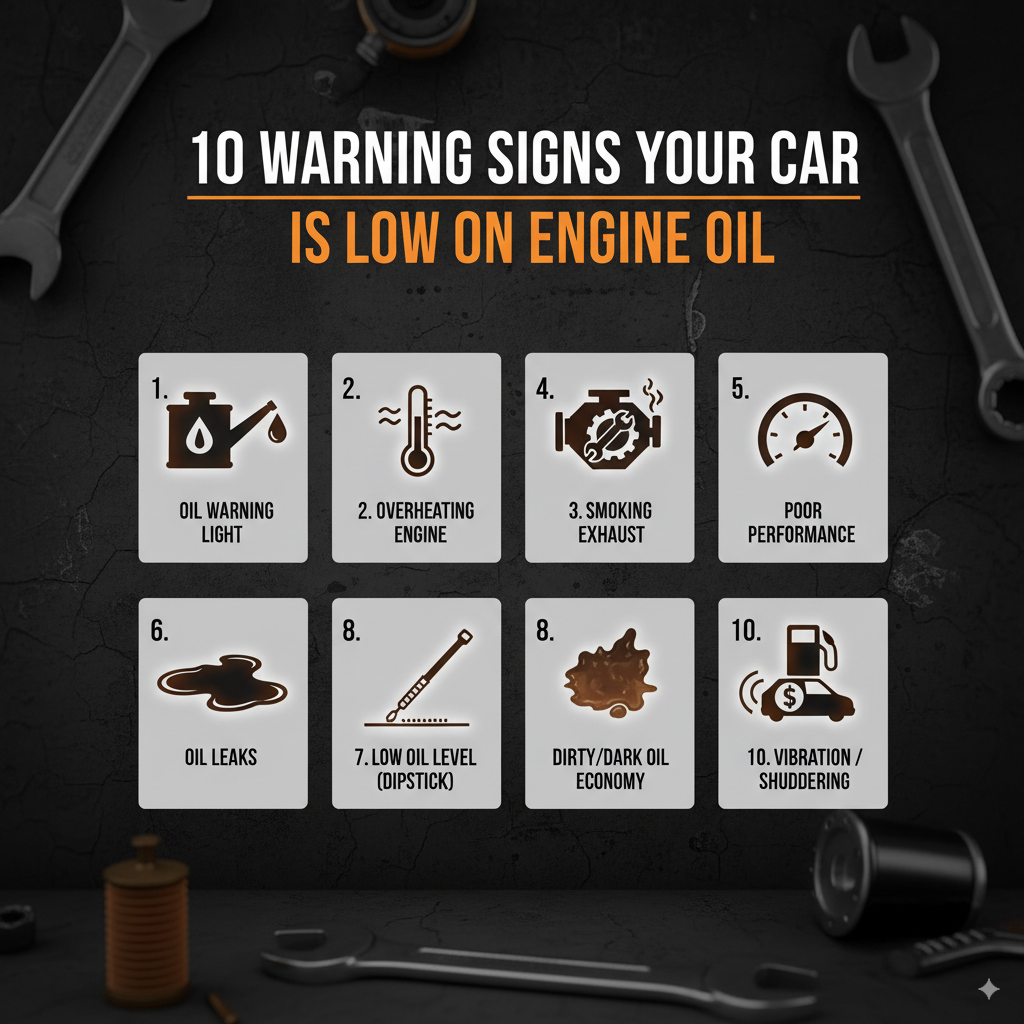
10 Warning Signs Your Car Is Low on Engine Oil
Engine oil is the lifeblood of your vehicle. It lubricates moving parts, prevents overheating, and keeps the engine running smoothly. When oil levels drop too low, even a short drive can damage critical components. Many drivers only check their oil when a warning light flashes, but by then, it may already be late. Learning to recognize the early signs of low oil in a car can save you from costly repairs and unexpected breakdowns. This detailed guide explains the ten most important warning signs, why they matter, and the actions you should take right away.
1. Engine Warning Light or Oil Pressure Light
One of the most direct signals comes from your dashboard. The oil can-shaped light, sometimes accompanied by the word “OIL” or “PRESSURE,” indicates that oil levels or oil pressure have dropped below the safe limit.
- If this light flickers while driving, it’s a sign that the engine isn’t receiving consistent lubrication.
- Continuous illumination means the oil system urgently needs attention.
What to do next: Safely pull over, switch off the engine, and check the dipstick. If the oil is indeed low, add the correct grade immediately. If the light stays on after topping up, the issue could involve the oil pump or sensor.
2. Unusual Engine Noises
Engines that run with insufficient oil lose the protective film between moving parts. This causes metal-to-metal contact, which produces sounds like ticking or tapping (often heard right after starting), knocking or rumbling from the engine block, or grinding noises during acceleration. These noises occur because the lack of lubrication increases friction and stress inside the cylinders.
What to do next: Stop driving until the oil level is checked. Continuous operation under these conditions risks irreversible engine damage.
3. Overheating Engine
Engine oil not only lubricates but also absorbs and disperses heat. When the level falls, the cooling effect weakens. A car with low oil may start running hotter than usual, even if the coolant is fine.
Clues to notice:
- Temperature gauge creeping upward more quickly than normal
- Engine bay feeling hotter than expected
- Smell of burning oil when stepping outside the car
What to do next: Do not rely on coolant alone. If overheating happens frequently, inspect oil levels along with the cooling system.
4. Burning Oil Smell
If you notice a sharp, burnt odor while driving or parking, oil could be leaking onto hot engine parts. Low oil levels often result from leaks around gaskets, seals, or the oil pan. This is serious because a leak reduces available oil and creates a fire hazard.
What to do next: After topping up, have a mechanic trace the source of the leak. Simply adding more oil without fixing the leak is only a temporary solution.
5. Poor Fuel Efficiency
Low oil increases internal resistance, forcing the engine to work harder to produce the same power. This additional strain burns more fuel. If your car suddenly consumes more gas without another explanation, low oil could be a hidden reason.
What to do next: Track your mileage. If the drop in fuel economy coincides with other signs of low oil in a car, check the dipstick and service records.
6. Reduced Engine Performance
Drivers often notice sluggish acceleration or a rougher ride when oil is too low. Without enough lubrication, the engine can’t operate at peak efficiency. This can appear as loss of smooth gear changes in automatic cars, delayed throttle response, or a noticeable decline in power when climbing hills.
What to do next: Confirm oil level with a dipstick check. If oil is fine, the issue may be related to filters or fuel delivery, but oil should always be the first inspection point.
7. Exhaust Smoke Changes
Healthy engines emit faint, nearly invisible exhaust. When oil levels drop or oil leaks into the combustion chamber, the smoke pattern changes. Thin blue smoke indicates burning oil inside the engine, while white smoke may suggest oil mixing with coolant. Both conditions can reduce available oil and harm engine components.
What to do next: If smoke color changes suddenly, schedule immediate diagnosis. Ignoring smoke signals can lead to full engine rebuilds.
8. Unstable Idling
Engines running with insufficient lubrication sometimes idle roughly. You may feel vibrations through the steering wheel or hear inconsistent revs when stopped at a light. This happens because low oil creates extra resistance in the crankshaft and connecting rods, preventing smooth rotation.
What to do next: Check oil level before investigating spark plugs, injectors, or sensors. Sometimes the solution is as simple as topping up.
9. Visible Oil Leaks Under the Car
Finding dark brown or black spots where your car was parked overnight often indicates an oil leak. While leaks alone don’t prove low oil, they nearly always cause oil levels to fall over time.
What to do next: Place cardboard under the car to monitor how much oil is leaking. Check the dipstick daily until repairs are made.
10. Engine Stalling or Failure to Start
In extreme cases, a car with critically low oil may stall unexpectedly or refuse to start. This usually means internal parts have seized due to lack of lubrication.
What to do next: If the engine locks up, do not attempt repeated restarts. Call for professional towing and inspection. Continuing to crank the starter can worsen the damage.
How to Confirm Low Oil Levels
Recognizing symptoms is useful, but the dipstick test remains the most reliable method.
Steps to check oil level properly:
- Park on level ground and turn off the engine
- Wait at least 5 minutes for oil to settle
- Pull out the dipstick, wipe it clean, reinsert fully, and pull it out again
- The oil should sit between the “MIN” and “MAX” marks
- If it’s below the minimum, add oil immediately
What Type of Oil Should You Use
Using the correct oil is as important as maintaining the right level.
- Viscosity matters: Check your owner’s manual for the recommended grade (e.g., 5W-30)
- Synthetic vs conventional: Many modern engines require synthetic oil for high-temperature stability
- Climate considerations: Colder regions benefit from oils that flow easily in low temperatures
Preventing Low Oil Issues
To avoid the risks altogether, adopt these proactive habits:
- Check oil monthly even if the car seems fine
- Change oil on schedule rather than waiting for problems
- Inspect for leaks when washing or servicing your car
- Use quality filters to keep oil free from debris
- Monitor oil consumption in older cars, as they may burn oil more quickly
Final Thoughts
Low oil is one of the most preventable causes of engine damage, yet it continues to surprise drivers who overlook routine checks. By learning to recognize the signs of low oil in a car, you place yourself ahead of expensive repairs and sudden breakdowns. Each symptom whether it’s a dashboard warning, strange engine noise, or smoke from the exhaust is the car’s way of signaling distress. Ignoring these signals risks the health of your engine. Acting quickly, checking levels regularly, and using the right oil type keeps your vehicle reliable for years to come.