Driving With a Bad Catalytic Converter: Risks, Symptoms, and Solutions
Driving With a Bad Catalytic Converter
A catalytic converter plays a central role in reducing harmful emissions by transforming toxic gases into less harmful ones before they exit the exhaust. When this component begins to fail, many drivers wonder if it is safe or legal to keep driving. The truth is that driving with a bad catalytic converter can lead to reduced performance, higher fuel use, possible fines, and eventual engine problems if ignored. This guide breaks down the symptoms, risks, and practical solutions in one place.
What Does a Catalytic Converter Do
A catalytic converter is fitted into the exhaust system between the engine and the muffler. Its purpose is to convert carbon monoxide, hydrocarbons, and nitrogen oxides into less harmful gases such as carbon dioxide, nitrogen, and water vapor. A properly functioning converter supports both environmental standards and engine performance.
Signs of a Bad Catalytic Converter
Recognizing problems early helps prevent further damage. Common symptoms include:
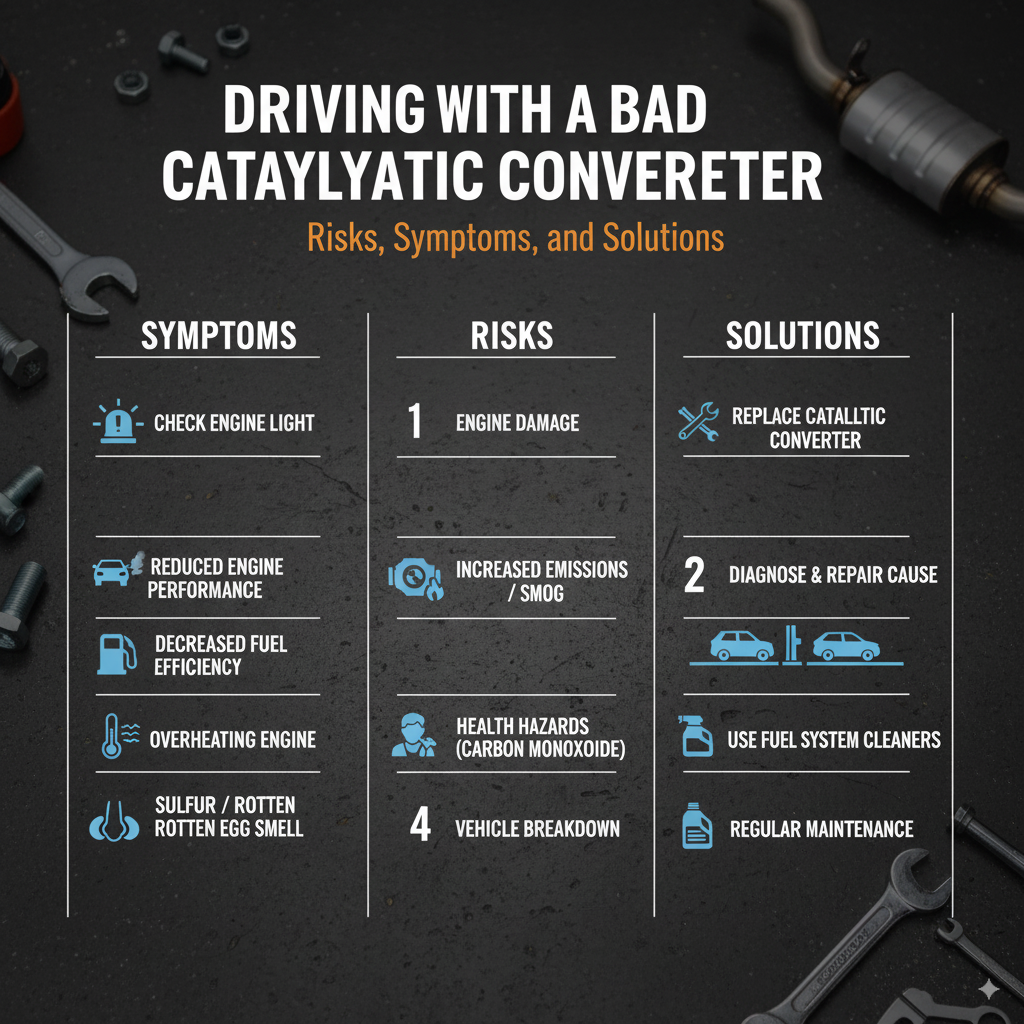
- Check Engine Light: One of the first indicators triggered by oxygen sensors monitoring the exhaust flow.
- Rattling Noise: A failing catalytic converter often breaks apart inside, causing rattling under the car.
- Poor Acceleration: Restricted exhaust flow reduces engine power, making acceleration sluggish.
- Excessive Smoke: A bad converter can’t filter exhaust effectively, leading to darker or unusual smoke.
- Rotten Egg Smell: Sulfur buildup creates a distinctive odor from the exhaust.
- Drop in Fuel Efficiency: Blockage forces the engine to burn more fuel to maintain power.
Risks of Driving With a Bad Catalytic Converter
Continuing to drive with a damaged converter affects more than emissions.
- Legal Risks: Many U.S. states require vehicles to pass emissions testing. A bad catalytic converter usually fails, which can lead to fines or inability to renew registration.
- Engine Damage: If the converter is clogged, it increases back pressure. This can overheat the engine, damage gaskets, and in extreme cases cause engine stalling.
- Fuel Waste: Poor combustion efficiency forces the engine to consume more gasoline. Over months, this adds significant cost.
- Environmental Impact: Driving with a faulty converter releases higher levels of carbon monoxide and hydrocarbons, contributing to pollution.
How Long Can You Drive With a Bad Catalytic Converter
While some cars may continue running for weeks or months with a bad converter, it is not recommended. A partially blocked converter might allow limited driving but can suddenly worsen, leaving you stranded. More importantly, the longer you drive, the greater the risk of harming the engine and facing higher repair bills.
What To Do If You Suspect a Bad Catalytic Converter
Taking action quickly can save money and keep your car compliant with regulations.
- Get a Diagnostic Scan: A mechanic can confirm issues using an OBD-II scanner that checks sensor data.
- Inspect Exhaust Components: Sometimes the issue may be a faulty oxygen sensor or exhaust leak, not the converter itself.
- Replace the Converter if Needed: If it is truly failing, replacement is the only long-term fix. Aftermarket units may be cheaper, but ensure they meet emission standards in your state.
- Avoid Quick Fix Additives: Fuel additives claiming to clean converters often mask the issue temporarily and do not solve the root problem.
Cost of Replacing a Catalytic Converter
Replacement costs vary widely depending on vehicle type:
- Standard passenger cars: $900 – $1,800
- SUVs and trucks: $1,200 – $2,500
- Luxury or hybrid vehicles: $2,000+
Labor charges and regional regulations may also affect the final cost. Though expensive, replacing the converter protects your engine, meets legal standards, and restores performance.
Can You Clean a Catalytic Converter Instead of Replacing It
In some cases where buildup is minor, cleaning may restore partial efficiency. However, if the converter is physically damaged, melted, or severely clogged, cleaning won’t solve the problem. Replacement is the only reliable option.
Preventing Catalytic Converter Problems
- Use the right fuel to avoid excessive deposits.
- Fix misfires quickly, since unburned fuel entering the exhaust can overheat and damage the converter.
- Perform routine maintenance like oil changes and air filter replacements to maintain proper combustion.
- Protect against theft, since catalytic converters are often stolen for the precious metals inside. Using protective shields can help deter thieves.
Final Thoughts
Driving with a bad catalytic converter may seem harmless at first, but the risks quickly outweigh the convenience of delaying repairs. From reduced performance to legal issues and environmental harm, the consequences build over time. Recognizing the symptoms early, confirming with diagnostics, and replacing the converter when necessary ensures your car stays reliable, efficient, and compliant with emission standards. The sooner the issue is addressed, the more you save in long-term repair and fuel costs.


